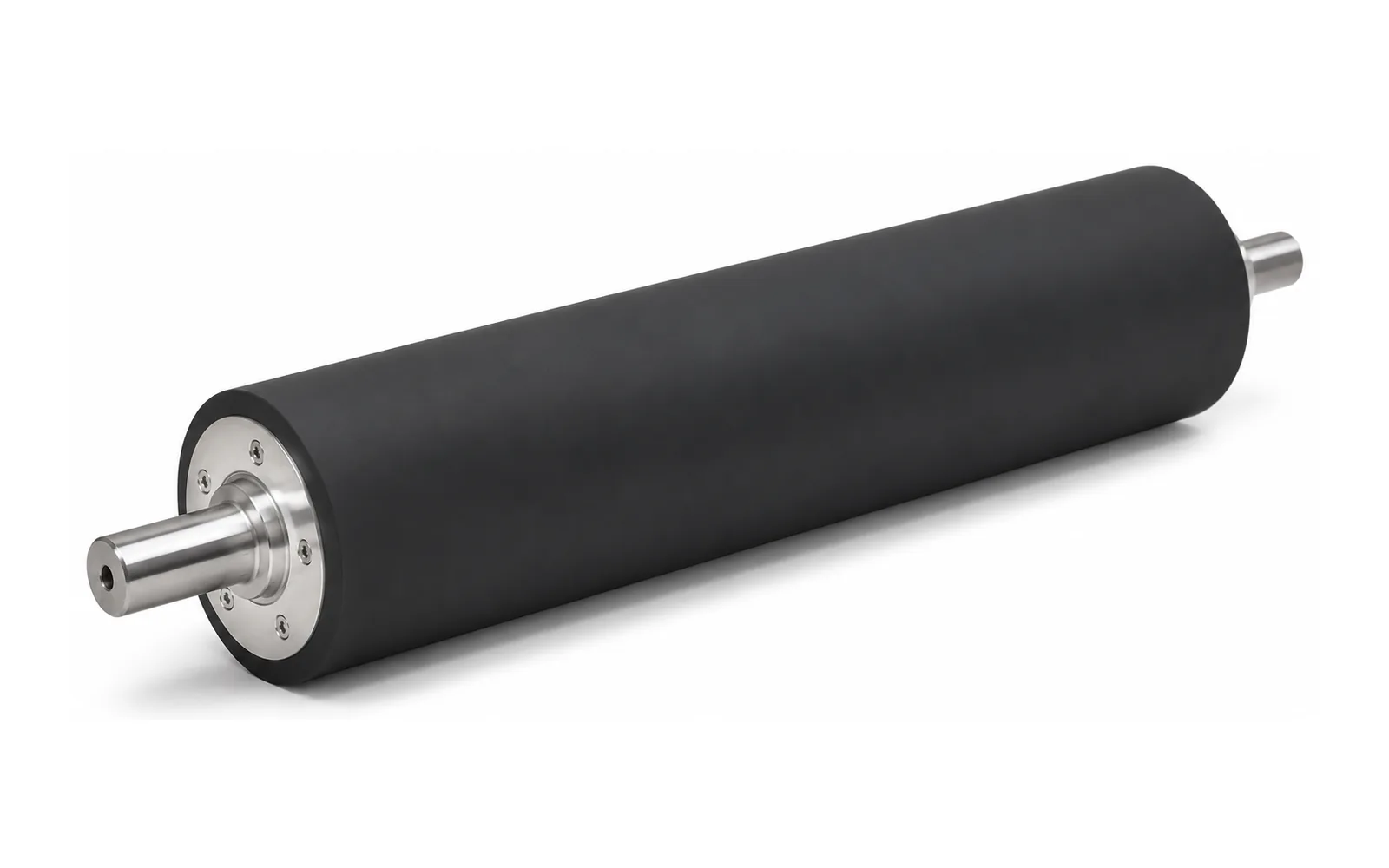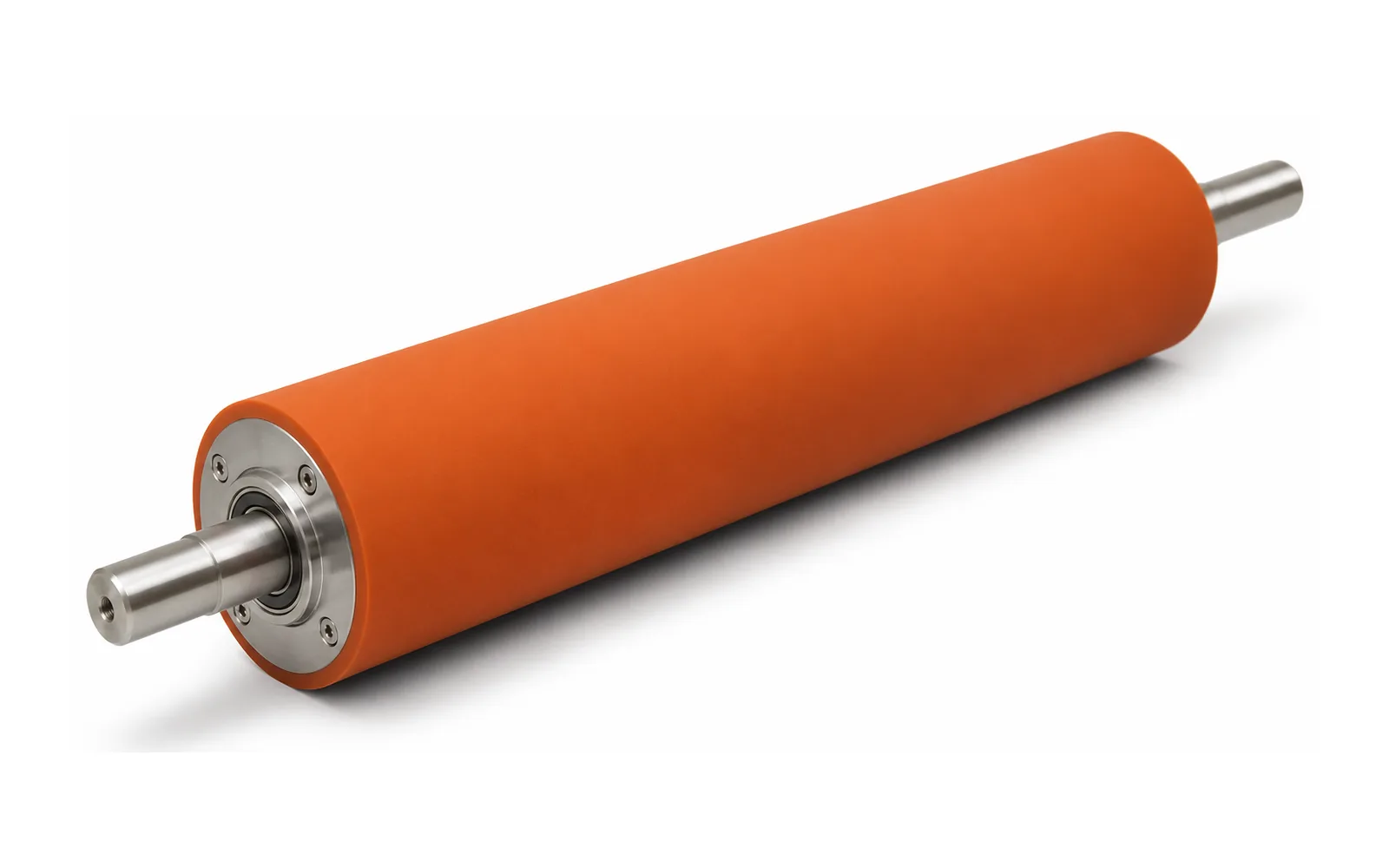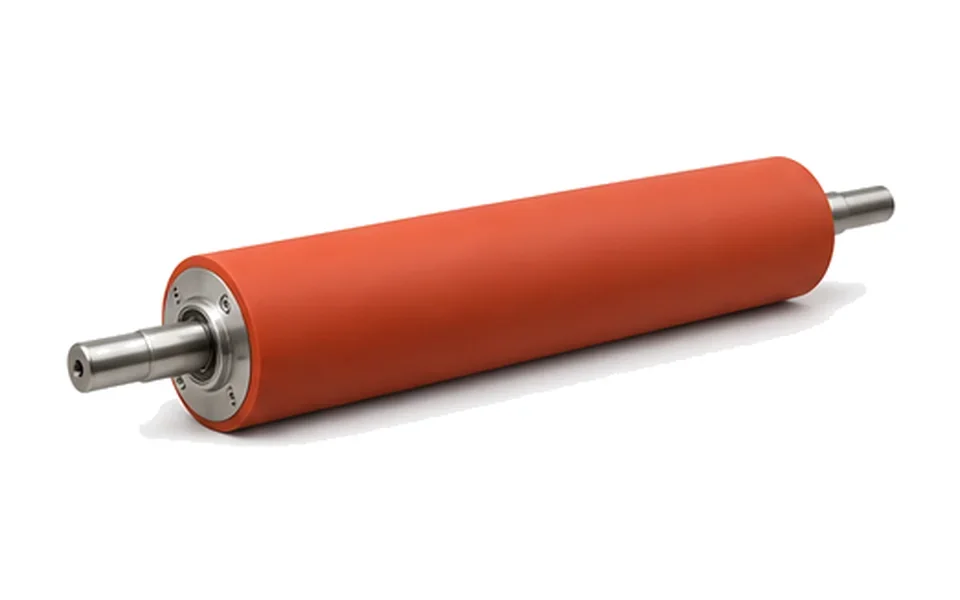
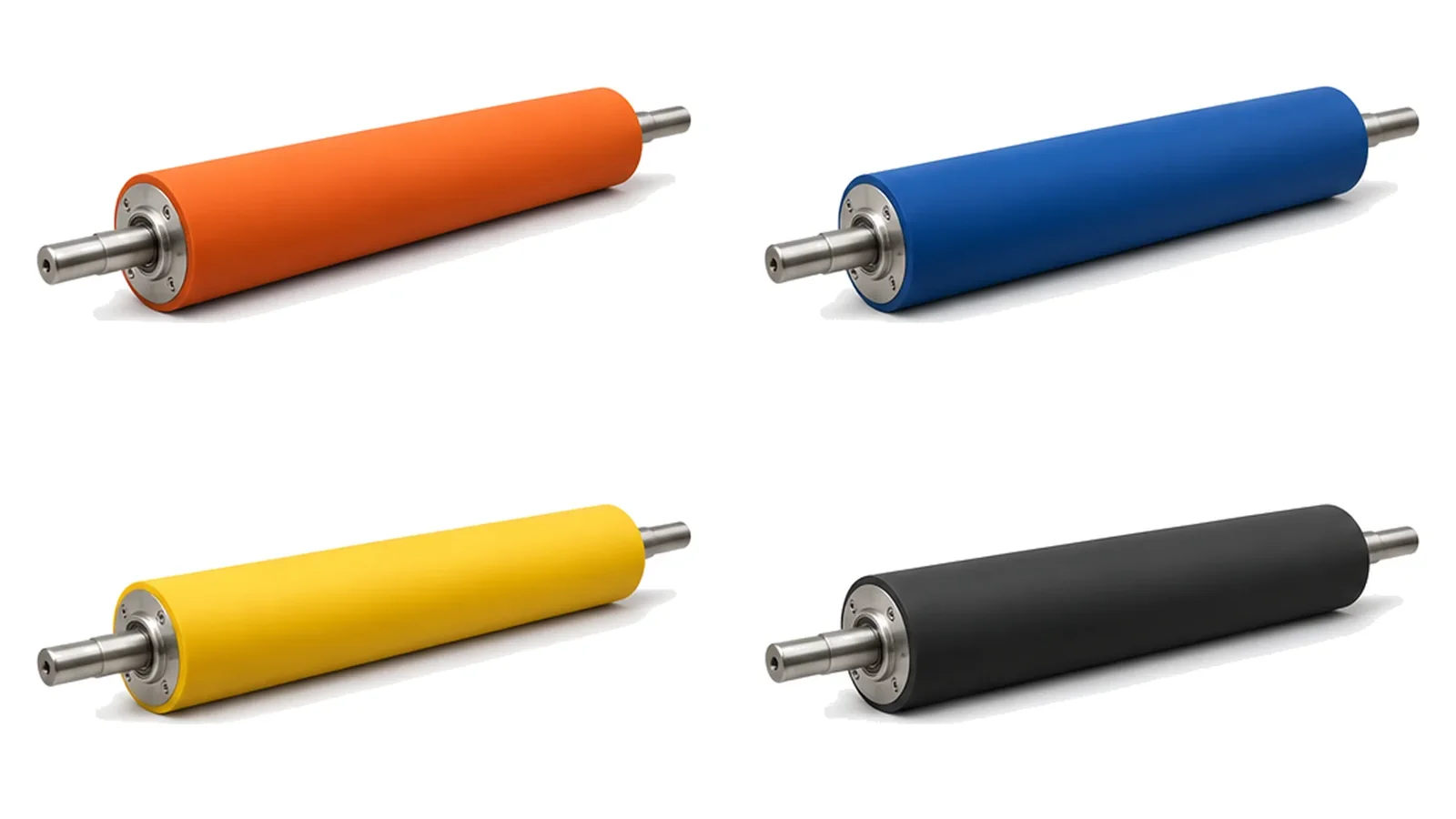
Most early roller failures come down to the wrong cover: a compound that swells in the ink, hardens with heat or wears through under load. Start with what the roller touches and how hot it runs.
Quick comparison
| Cover | Typical temp. range | Good with | Avoid |
|---|---|---|---|
| Nitrile (NBR) | -30 to +100 °C | Oil and solvent-based inks, greases | UV inks, ketones, ozone |
| EPDM | -50 to +150 °C | Water-based and UV inks, hot water, steam | Mineral oils, oil-based inks |
| Silicone (VMQ) | -60 to +200 °C | Heat, release, hot lamination | Abrasion, sharp edges |
| Polyurethane (PU) | -30 to +80 °C | Abrasion, cutting, heavy load | High heat, strong solvents |
| Ebonite | -10 to +80 °C | Rigid duty, acids and chemicals | Nip duties that need resilience |
Ranges are general reference values. Actual limits depend on the specific compound, hardness and duty cycle.
Matching cover to application
- Rotogravure and solvent printing: nitrile, with anti-static grades where the web carries a charge
- UV and water-based printing and coating: EPDM
- Hot lamination, sealing and release duties: silicone
- Feed, pinch and heavy-duty rollers: PU
- Rigid guide rollers with chemical exposure: ebonite
Questions to answer before ordering
- Which inks, solvents, adhesives or chemicals touch the roller, and which cleaning agents are used?
- What is the surface temperature at the nip?
- What hardness (Shore A) does the current roller have, and how did it fail?
- What are the finished diameter, face length, crown and journal details?
- How fast does the line run, and does the roller need balancing?
Hardness
Softer covers give a wider nip and conform better to uneven substrates; harder covers wear less and hold dimensions. If you are replacing a roller, its current hardness and any problems seen in service are the best starting point.
Need help?
Share your machine and process details with your enquiry and our team will recommend a cover.