
Rubber & polymer covered rollers
PU (polyurethane) rollers
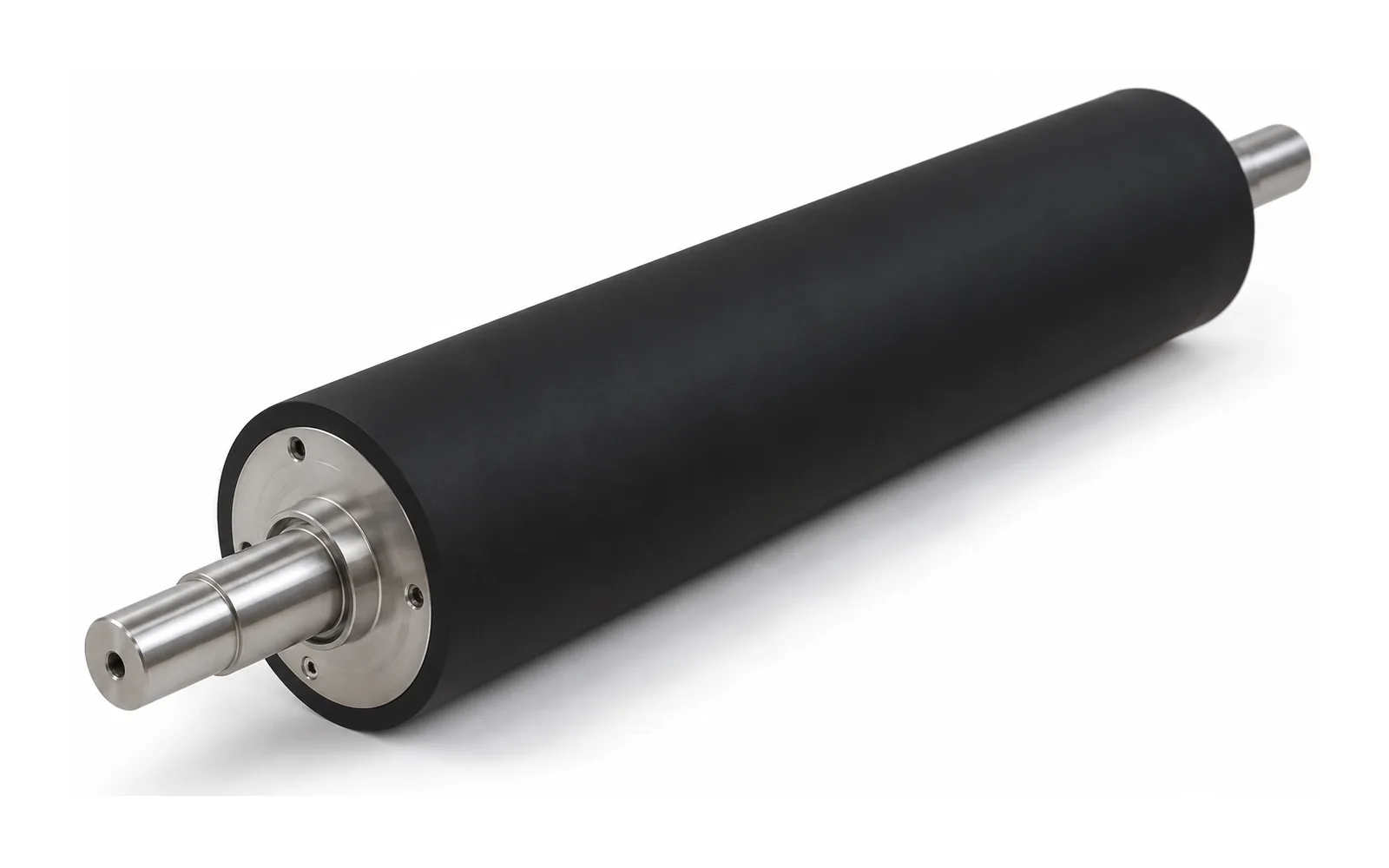
Polyurethane-covered rollers for duties where wear, cutting and heavy load would quickly damage ordinary rubber. PU combines high abrasion and tear resistance with good load-bearing and dynamic properties.
About our PU rollers
PU rollers are used in printing and converting, as feed and pinch rollers, in conveyors and in steel and wood processing. The cover hardness is selected for the load and grip required, and held uniform within ±1 Shore A.
Compared with rubber, polyurethane usually lasts longer under abrasion and cut, but it is less suited to high heat and some solvents. If your roller runs hot or in aggressive chemicals, we will suggest the right alternative.
Key performance features
- Hardness selected for the application
- Uniform hardness across the surface, within ±1 Shore A
- No run-out on the finished diameter with reference to the bearing seats
- Wide choice of covers to resist chemicals and solvents
- Porosity-free surface finish
- Polymer selection and compounding matched to the duty
- Technical support on site and online
Applications
- Printing and converting rollers
- Feed and pinch rollers
- Conveyor and guide rollers
- Steel and metal processing lines
- Wood and plywood machines
Objectives
- Best printing result
- Maximum colour registration
- Long service life
- Minimum or no chemical effect
- Anti-static
- Better dynamic properties
- Good abrasion and ageing resistance
- Uniform quality
Materials
Typical cover compounds for PU rollers. The final choice depends on your inks, chemicals, temperature and hardness requirement.
PU
Polyurethane (PU)
-30 °C to +80 °C
Abrasion and cut resistance · High load capacity · Good dynamic properties
How we work
From your old roller or drawing to a roller that runs true
01
Roller review
We check your drawing or old roller, confirm diameter, face length, journals and the hardness you need.
02
Cover selection
A cover compound is proposed for the inks, chemicals and temperatures your roller sees in service.
03
Core and covering
The core is prepared or made new, then the cover is applied without porosity and cured.
04
Grinding and inspection
Ground true to the bearing seats, finished as specified, and checked for hardness and run-out before dispatch.
Industries using PU rollers
FAQ
PU Roller: common questions
When should I choose PU instead of rubber?
Choose PU when abrasion, cutting or heavy load are the main causes of wear. Rubber is often better for high temperatures, strong solvents or where a softer, more resilient nip is needed.
Can you re-cover my existing roller?
Yes. The old cover is stripped, the core is inspected and prepared, and a new cover is bonded, cured and ground to size. Re-covering a sound core is usually faster and cheaper than a new roller.
What details do you need to quote?
A drawing or the old roller, finished diameter, face length, journal details, required hardness in Shore A and what the roller contacts (ink, solvent, adhesive, film, heat). Send these through our request a quote form.
Related rollers
Request a quote for PU rollers
Share your roller drawing or sample, required hardness and what it contacts. Our team will recommend a cover and respond with a quotation.