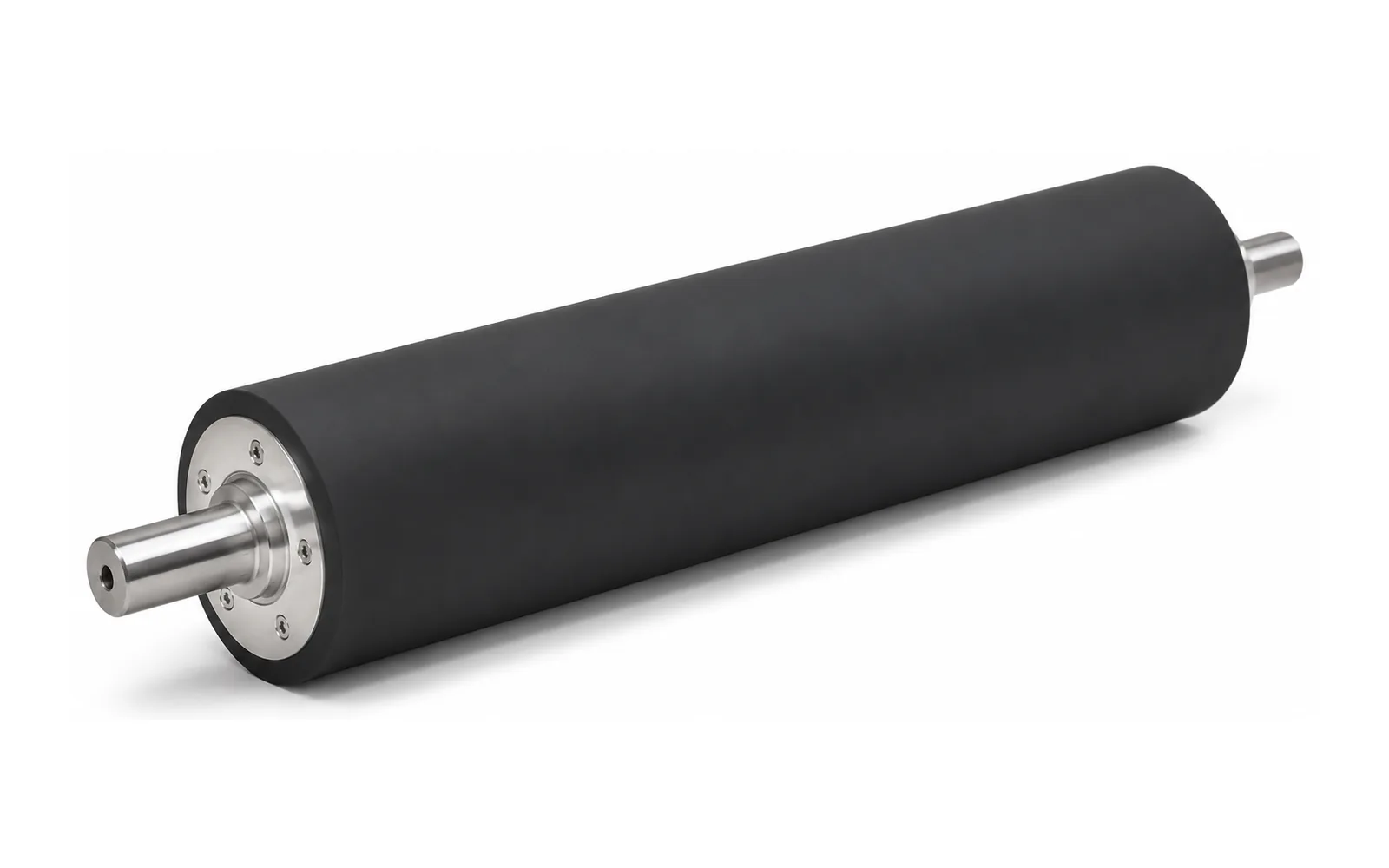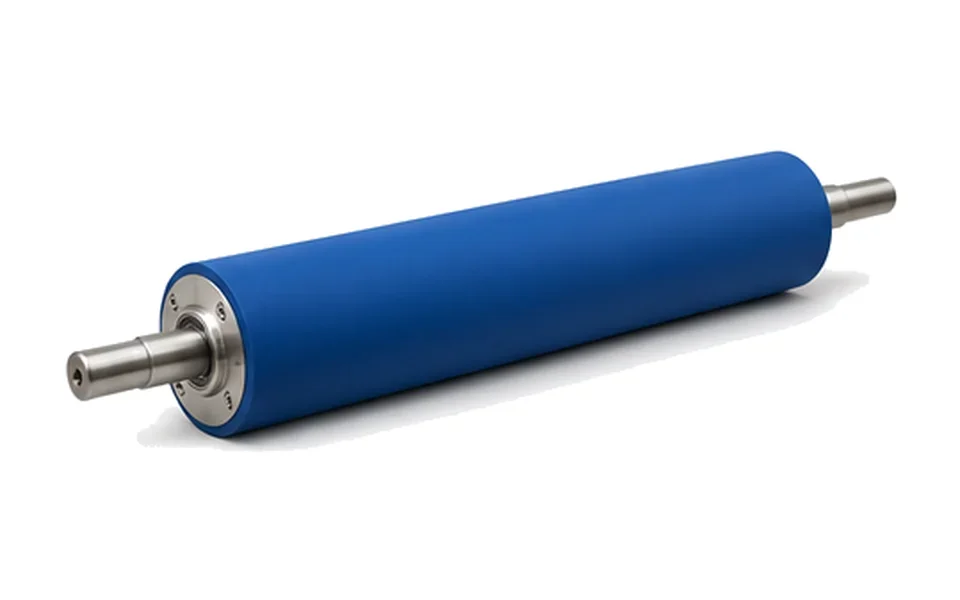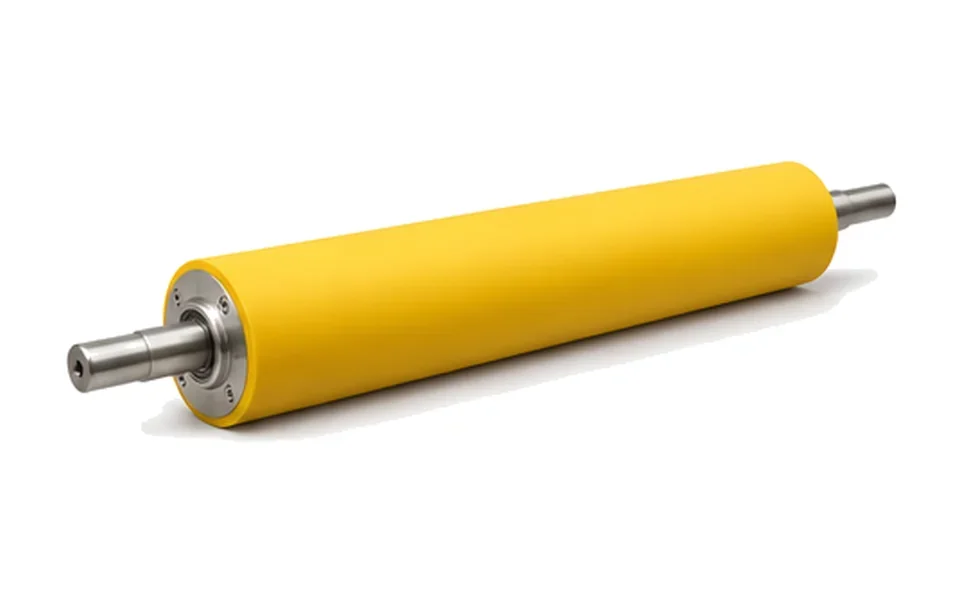
A worn rubber cover does not mean the whole roller is finished. If the core and journals are sound, re-covering is usually faster and cheaper than buying new.
When re-covering makes sense
- The core is straight and free of deep corrosion or cracks
- Journals and bearing seats are within tolerance
- The roller's design still suits the machine and process
When a new roller is the better choice
- The core is bent, cracked or badly corroded
- Journals are worn beyond repair
- You want to change the design, such as a different diameter, crown or core material
Read the old cover before you replace it
How the old cover failed tells you what to change. Swelling or softening usually means the compound is not resistant to the ink or solvent. Cracking points to heat or ozone ageing. Glazing or a shiny, hard surface often means the hardness or surface finish needs adjusting. Edge damage suggests web edges or misalignment.
What to send your roller supplier
- The roller itself, or a drawing with finished diameter, face length and journal details
- Required hardness in Shore A, or the hardness of the current cover
- What the roller contacts: inks, solvents, adhesives, films, water or heat
- How the old cover failed, with photos if possible
With these details we can quote re-covering or a new roller. Get in touch or request a quote.