
Printing & lamination rollers
Solventless lamination rollers
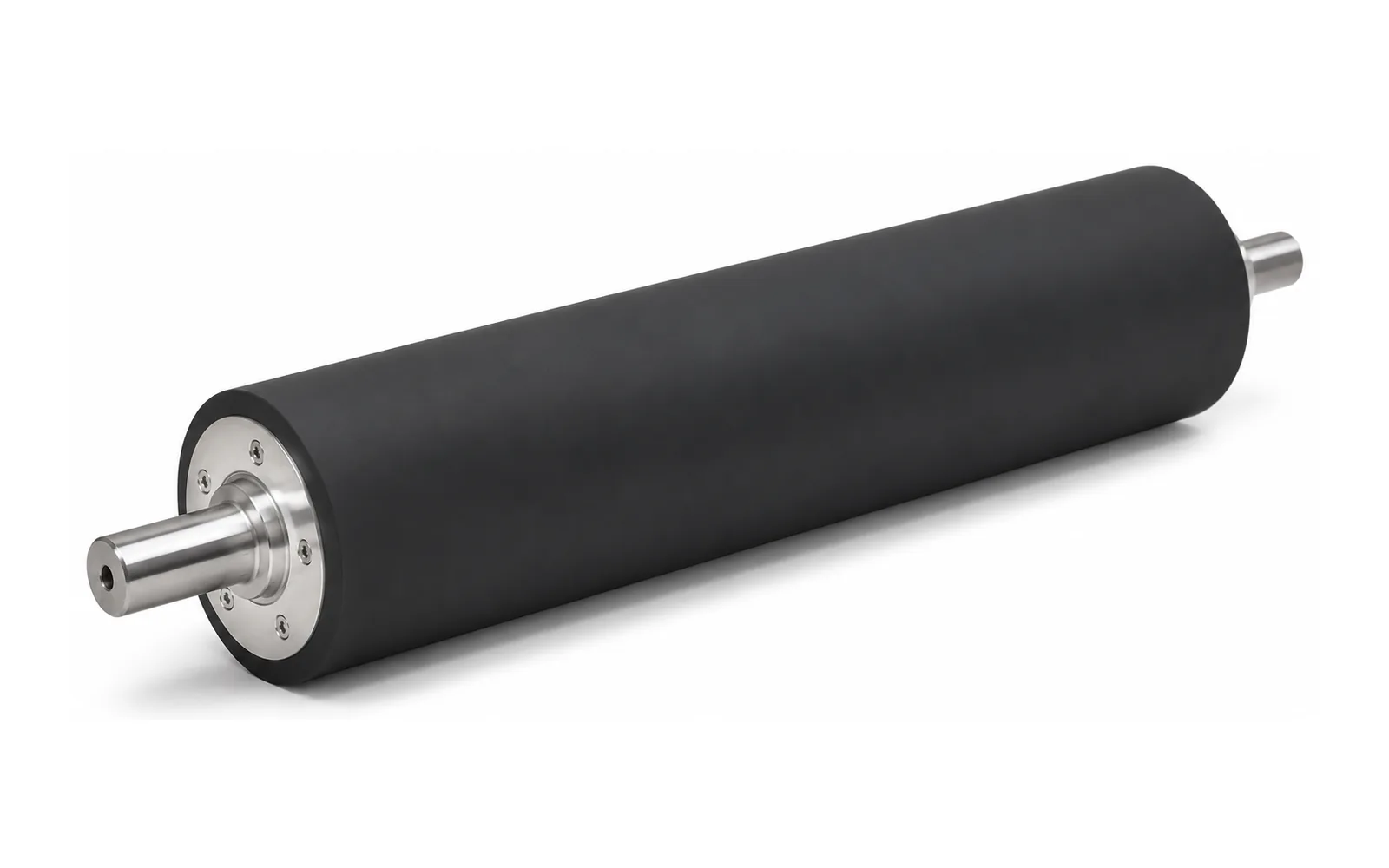
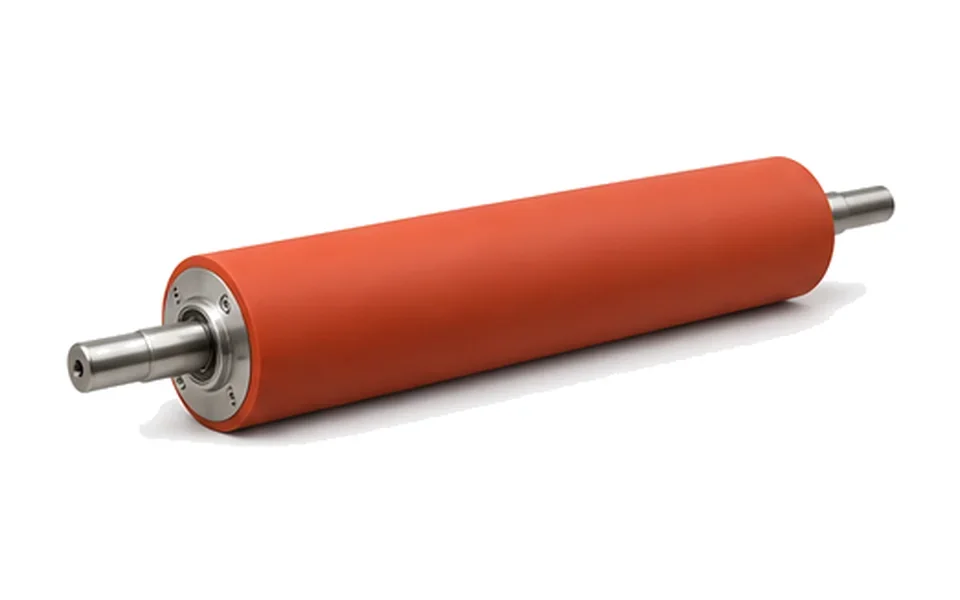
Rubber rollers for solventless and solvent-based laminators. Covers are chosen to resist the adhesive system and to hold their hardness at the nip temperature, so bond strength stays even across the web.
About our solventless lamination rollers
Solventless laminators apply a thin, even adhesive film and then combine two webs under heat and pressure. Any variation in roller hardness or diameter shows up as uneven coat weight, tunnelling or poor bond strength.
We grind covers for concentricity against the bearing seats and finish them free of porosity, which keeps adhesive from building up on the surface. Compounds are matched to polyurethane adhesives, cleaning agents and nip temperatures.
Key performance features
- Hardness selected for the type of printing or lamination
- No run-out on the finished diameter with reference to the bearing seats
- Porosity-free rubber surface finish
- Dimensional accuracy on diameter, face length and crown
Applications
- Rotogravure printing
- Flexographic printing
- Offset printing
- Tin printing
- Solventless / solvent-based lamination
- Extrusion lamination
- Heat-press lamination
Objectives
- Best printing result
- Long service life
- Anti-static / anti-ozonant compounds
- Conductive compounds where required
- Good abrasion resistance
- Uniform quality across the face
Materials
Typical cover compounds for solventless lamination rollers. The final choice depends on your inks, chemicals, temperature and hardness requirement.
EPDM
EPDM
-50 °C to +150 °C
UV and water-based inks · Hot water and steam · Ozone and weather resistance
VMQ
Silicone (VMQ)
-60 °C to +200 °C
High temperature · Release / non-stick · Food-grade compounds available
NBR
Nitrile (NBR)
-30 °C to +100 °C
Oil and solvent ink resistance · Good abrasion resistance · Cost-effective
How we work
From your old roller or drawing to a roller that runs true
01
Roller review
We check your drawing or old roller, confirm diameter, face length, journals and the hardness you need.
02
Cover selection
A cover compound is proposed for the inks, chemicals and temperatures your roller sees in service.
03
Core and covering
The core is prepared or made new, then the cover is applied without porosity and cured.
04
Grinding and inspection
Ground true to the bearing seats, finished as specified, and checked for hardness and run-out before dispatch.
Industries using solventless lamination rollers
FAQ
Solventless Lamination Roller: common questions
What hardness should a lamination nip roller have?
It depends on the films, adhesive and machine. If you are replacing an existing roller, its current hardness and any problems seen in service are the best starting point. We will recommend an adjustment if needed.
Can you re-cover my existing roller?
Yes. The old cover is stripped, the core is inspected and prepared, and a new cover is bonded, cured and ground to size. Re-covering a sound core is usually faster and cheaper than a new roller.
What details do you need to quote?
A drawing or the old roller, finished diameter, face length, journal details, required hardness in Shore A and what the roller contacts (ink, solvent, adhesive, film, heat). Send these through our request a quote form.
Related technical guides
Related rollers
Request a quote for solventless lamination rollers
Share your roller drawing or sample, required hardness and what it contacts. Our team will recommend a cover and respond with a quotation.